Why Large Language Models Fail at Regional Dialects (And Why I Switched to SLMs)

A few months ago, I was staring at a customer support bot log at 1 AM, wondering why a rollout had completely stalled. According to research from Microsoft, a user from a tier-2 city in India submitted a simple support request using a mix of Hindi and Marathi(classic code-switching or code-mixed text) in the Latin script, which the advanced large language model failed to understand correctly.
The massive, multi-billion-parameter frontier model I was using confidently completely missed the point. It ignored the regional phrasing, hallucinated a generic response, and left the user frustrated.
That night, I realised a harsh truth: building AI to rapidly digitise regional markets means accepting that bigger is rarely better.
The Trap of the “One-Size-Fits-All” LLM
When we build AI apps, it is easy to assume that massive underlying models can handle anything you throw at them. They speak dozens of languages on paper, but there is a massive gap between standard textbook translation and how people actually communicate.
Most global LLMs are trained on massive scrapes of the English-dominated internet. When they encounter regional dialects, localised slang, or code-switching—like mixing native vocabulary with English grammar—they stumble.
They miss the cultural context, the subtle politeness markers, and the local idioms. Trying to fix this with complex prompt engineering usually results in sky-high token costs and sluggish response times, which completely kills the user experience.
Why I Switched to Fine-Tuned SLMs
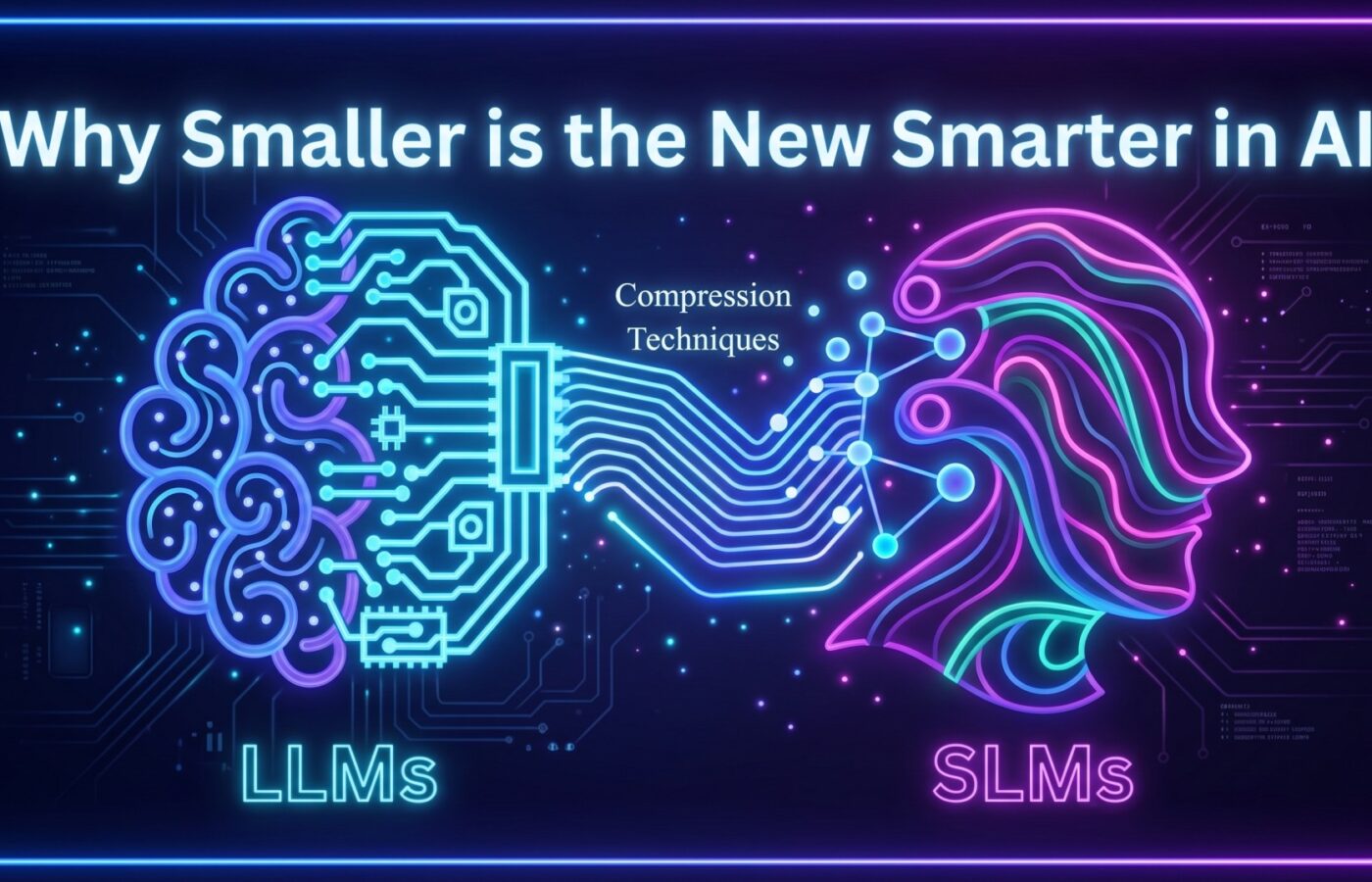
After wasting weeks trying to work my way out of the problem, I pivoted to Small Language Models (SLMs), specifically in the 1B-8B parameter range. Instead of using a massive model that tries to know everything about the world, I used a lean base model and fine-tuned it on hyper-local data.
The results were a massive wake-up call. The smaller, specialised model captured the regional details perfectly, at a fraction of the cost.
Here is why this approach works so well for regional markets:
- Dialect Accuracy: A model trained specifically on local chat logs or regional data understands your users’ actual voice.
- Cost Efficiency(SLM vs LLM cost for customer support bots): Running a 7B model is much cheaper than API calls for frontier models, making your architecture highly scalable.
- Low Latency: Smaller models process tokens faster, which is essential when deploying apps for users on spotty mobile networks.
A Quick Roadmap to Building a Regional SLM
If you are struggling to make your AI work for a specific local market, stop tweaking your prompts and change your architecture instead. Here is the workflow I now use:
1. Source Genuine Local Data
Do not just translate English datasets using an automated tool. Gather actual conversational data, localised forums, or crowdsourced transcriptions that reflect how people genuinely talk in daily life.
2. Leverage Efficient Fine-Tuning(QLoRA fine tuning for regional dialects)
You do not need a massive budget or a cluster of expensive GPUs. Apply methods such as QLoRA to fine-tune a solid base model on accessible hardware, focusing the training specifically on your target language patterns.
3. Keep Humans in the Loop
Automated benchmarks will not tell you if a regional phrase sounds natural. Work with native speakers to evaluate the outputs and mark any subtle cultural misunderstandings before you deploy to production.
Shifting from massive, generalised LLMs to focused, fine-tuned SLMs completely revolutionised my project. It turns out that winning a regional market does not require the largest model on the planet—it just requires a model that truly understands the locals.
Frequently Asked Questions
Q: Won’t an SLM lose its general reasoning abilities if it is too small? Yes, a smaller model will lose some general knowledge, but for specialised regional tasks, for example, customer service, localised search, or e-commerce routing, it does not need to know how to write Python code or explain quantum physics. It just needs to do one job perfectly.
Q: How much localised data do I actually need to fine-tune an SLM effectively? You do not need billions of tokens. High-quality, clean datasets of a few thousand distinct, localised conversations or high-fidelity translations are often enough to drastically improve a model’s performance with respect to local differences.
Q: What are the best open-source base models to start with for multilingual tasks? Models like Llama-3-8B, Gemma-7B, or specialised regional model families offer an excellent balance of size, speed, and baseline multilingual capability, making them perfect candidates for localised fine-tuning.